Panic or Awareness

May 17th, 2013

 angelina-jolie-13.jpg

Angelina Jolie shocked the world with her announcement  that several months ago, she had undergone prophylactic mastectomies after learning that she carried the BRCA1 gene mutation.  Jolie’s mother died from ovarian cancer in her mid 50’s which undoubtedly led to Jolie being tested herself.  My 3 generations of breast cancer history sent me for genetic testing more than a decade ago as well.  After testing positive for BRCA2, I elected to have prophylactic mastectomies and an oophorectomy.  I became a “pre-vivor”, a term often referred to those that take surgical measures to prevent cancer from occurring.

Now that this news is being discussed everywhere from tabloids to medical professionals I am wondering about the aftermath of such a public announcement by such a visual personality.   Certainly her disclosure has sparked a new interest in breast cancer risk and prevention - and that is a good thing - but I can’t help but wonder if her actions will be interpreted by women who are not in the very specific risk category leading them to feel an over exaggerated  sense of personal risk and consequently make decisions that may not be in their own best interest.  For those that do carry the mutation, this public decision may also challenge them to take action. In my own family this news has started an email chain discussion about other risks associated with our BRCA2 gene.

Removing healthy breast tissue is both a medical and psychological decision.  Surgery does not come without risk.   I carefully weighed my own personal risk and made a bold decision to remove my healthy breast tissue. It was the right decision for me. Jolie’s announcement seems to be educating the public about  the BRCA1 and BRCA2 genes and the subsequent risks associated with it.   A downside to this awareness is that genetic testing can cost more than $4,000 and if not always covered by insurance. The upside is that in 1998 a law was enacted that requires insurance companies to pay for breast reconstruction for mastectomies.

This aggressive approach to breast cancer prevention has been around for awhile but there is no question that a person which such star power as Jolie brings awareness to a new level.  Facing your risks and taking control is empowering and it’s my hope that this news does increase awareness but not panic.  Personally I thank Jolie for going public with her bold decision.   I feel I will be explaining  my genes and my treatment decisions less often and may not have to answer why I call myself a “Pre-vivor”.

Susan M. Beausang

President 4women.com

Running from Evil

April 22nd, 2013

 bostontrag.jpg

I’ve been an avid runner most of my adult life. It’s only recently that my knees have said “no more” but it hasn’t lessened my desire or my keen interest in watching races such as the Boston Marathon.  I’ve been that runner crossing the finish line, exhausted, exuberant and energized by a throng of strangers cheering me on. I’ve also been at many finish lines watching runners accomplish their dream of running a marathon. The atmosphere of these events is electrifying and something to remember.  Never once did I even imagine that evil would be lurking in the crowd to inflict pain, suffering, maiming and even death on the on lookers - until last Monday.  That’s when two horribly evil men changed lives forever.

When I read and watch horrific stories such as this, I often wonder if people are born evil or if evil develops or if they are predisposed to evil.  I’m sure this is a debate for the ages and for which there probably does not exist a scientific answer but I do know that what occurred in Boston is pure evil.

My heart goes out to the victims and their families and my praise goes out to all first responders and the resiliency of the residents of Boston and surrounding areas.  Yes, this act was evil but I am willing to bet the 118th running of the Boston Marathon will show solidarity and true meaning to the newly coined phrase “BOSTON Stands AS One.”

Susan Beausang

President 4women.com

Who Owns Your Genes?

April 16th, 2013

As a mmyriad.jpgutation carrier of the BRCA2 gene I am tuned into the case going before the US Supreme Court this week as to whether human genes can be patented.  Just repeating those words seems awkward and science fiction like.  After all, I hold two US Patents on my scarf design.  I can wrap my  head (no pun intended) around that notion but to think a company can patent my genes?  The awarding of patents on human genes is not a new phenomenon, the US Patent and Trademark Office has been awarding patents on human genes for almost 30 years but the case that is up for debate is very specific to Myriad Genetic Inc’s patents on two genes linked to increased risk of breast and ovarian cancer  (BRCA1 and BRCA2).

Trying to understand the complexity of the case has the Supreme Court justices breaking down the argument to laymen terms by discussing  items like chocolate chip cookies as an example.  Justice Sonia Sotomayor was quoted as saying “if a new way was found to extract the ingredients of a cookie, a company still wouldn’t be able to patent flour, eggs and salt.” She also went on to say that “in isolation, it (gene) has no value, it’s just nature sitting there”.  Myriad definitely gets   kudos for isolating the gene and it’s use but perhaps not the gene itself.

At the crux of the matter is that Myriad is trying to patent an isolated portion of the DNA with “markedly different chemical structure” from DNA within the body.  Opponents fear that If Myriad is able to patent  the BRCA1 and BRCA2 gene it may slow down valuable research for life saving measures for those diagnosed with breast cancer.  Myriad argues that without the cash flow that comes from these patents,  that necessary scientific discoveries to combat diseases won’t happen. Then there is the fear that companies like Myriad may one day decide that this isn’t profitable enough for them and abandon that line of work.

brca-genes.jpg

Myriad currently owns the only BRCA gene test.  They developed the BRCA analysis that looks for mutations on the breast cancer predisposition gene (BRCA).  I’ve been told that having this mutation increases my risks of breast, ovarian and other cancers.  This knowledge and my family history of 3 generations of breast cancer, caused me to take a proactive stance with prophylactic surgery.  I’ve not looked back on those decisions and am thankful for that knowledge.

gavel1.jpg

The Supreme Court will rule on this by the end of the summer.  Surely after this case is debated our Supreme Court justices will feel that they have just completed a crash course in biology!   There is no doubt that I will be following this case with special interest.  How do other BRCA mutation carriers feel about this case?

Susan Beausang

4women.com

Alopecia and the hostage game!

April 13th, 2013

bald-spot.jpg

Wedding planning (my son) has kept me blog silent for a few months- but I’m back with a vengeance.  I’ve been playing the Alopecia game for 12 years.  The disease has toyed and teased with my emotions during that time with several re-growths, coincidentally for two of my boys weddings!  It was only natural that I thought I would have hair for this wedding as well. Not the case.  Several months before the wedding the tell tale bald spots began to surface. I tired to keep them under control with steroid injections but when the last one appeared right smack in the front of my head, I knew Alopecia was going to win this time.

What is the big deal?  I have an arsenal of beautiful beaubeau scarves to wear and even a wig or two.  The big deal was that  I was being held hostage by the Noggin Gnomes - those little critters that creep into your mind and convince you that no matter what you wear you won’t be yourself.  For me, they surface occasionally and unexpectedly. They eat away at my self esteem and bring me right back to the early days of my diagnosis.

Yeah, once again I was temporarily held hostage  by Alopecia, but now that the wedding is behind me, I am  free to be me!  Bye bye Noggin Gnomes….Until next time.

Susan Beausang

President, 4women.com

Putting your hair in persepctive.

January 6th, 2013

Guest blogger, Erica Parks is a stay at home mother of two wonderful children, an artist, a lifetime Girl Scout, and an avid fan of anything chocolate.  Erica can also count herself among those that call themselves Cancer Survivors. She endured three rounds of cancer (and is facing a fourth), a handful of surgeries, and a battering of tests to combat the disease, each time hoping it’ll be the last time. Somewhere along the journey she decided she’d start a blog not just to tell her story, but to also help others who might be facing the same thing.  She is in no way a medical professional, even though she has extensive knowledge. She is merely a very experienced patient.

erica-parks.jpg

Erica’s Post:

If you take any sixteen  year old girl, stand her in front of a mirror, and ask her what her greatest feature is, it shouldn’t surprise you that she’ll come up with something physical.  Never mind that most of the time, they’ll also nitpick and poke at all the features they have problems with, but usually there is at least one that they like. Few will point out their will to live or their good music tastes or their compassionate  understanding for fellow man. Just setting them up in front of that mirror indicates you want them to pick out something they see, and at sixteen very few will go beyond the surface. For me that feature would have been my eyes, big, blue, expressive, and probably the only part of my face that I could stand looking at when I was sixteen.  In high school a lot of girls tend to focus on their physical appearance, and for a lot of us that doesn’t really change when we leave. Our tastes change, we mature, but there’s still a sort of emotional pride that we carry when we go out knowing that we look and feel good about ourselves.

So it should come as no surprise to us when something changes our physical norm that we take it as an emotional hit.  At the age of sixteen I went from a healthy teen whose mind was full of high school fluff and drama to a teen that was facing a diagnosis of cancer. Cancer was something completely foreign to me at the time, and since I had experienced no symptoms of the disease I found myself feeling more anxiety about the treatment instead. Everybody knew (in my sixteen-year-old mind) that cancer meant chemotherapy and that chemotherapy meant hair loss. Strangely enough, because I felt fine, I never really thought that the cancer would kill me. This was likely brought on partially by the fact that I was a teenager and, naturally, quite invincible.

As chemotherapy came crashing through my life I clung to the few things that helped me feel normal.  My hair was one of those.  I cut it short and dyed it brown (my mother had never let me dye my hair before this, so I leaped on the possibility of playing with it a little), and then proceeded to watch it gradually thin over the next few weeks.  I wore bandannas to cover the patches in the back, pushed all of it forward so that it looked like I had an ample supply of hair jutting out the front, and did my best to pretend that what I saw in the mirror happening every day wasn’t happening at all. It took a girl I barely knew nearly tackling me in the auditorium and exclaiming, “Omigosh! Your hair!  you look like you’re going through chemotherapy!” to make me realize that I wasn’t fooling anybody but myself. A short week later I  knelt over the trash can with two close friends buzzing away the last remaining strands of my hair.

It became apparent to me that bandannas wouldn’t hide what I was going through, and in a sea of over two thousand high school students I didn’t want to be the one that stood out as the sick one. I didn’t want the pitying glances, the constant queries pertaining to my health, or the cries of,  “You poor thing!”.  I wanted, quite simply, to disappear. But I couldn’t. Each morning I stared at myself in the mirror, my shiny head reminding me that normalcy wasn’t something I would ever achieve.  Again, I tried to hide in wigs, but the things were so hot that half the time I’d only make it through part of the day before I’d find a place to hide and fan off.  Wigs gave me temporary solace, though I’d find humor in how many more compliments I’d get about my new hair style than I ever had when  I actually had hair.  Still, I’d find myself at home crying to my mother when the next dance came around how nobody would ever want to ask a bald girl out. Unlike most of the sweet songs and stories where some kind boy sweeps in and escorts the sick girl to the dance, my life proved opposite and the entirety of my junior year was spent avoiding dances simply because I didn’t want to put up with the humiliation I imagined would happen the moment I stepped out onto the dance floor.

Over time I began to find places where I could remove my wig. With friends during lunch in the auditorium was one place.  Often times my hair would try to grow back between chemotherapy sessions and then it would fall out all over again after the next, leaving me with a patchy baby fuzz that my friends would fondly run their hands through.   I gained the affectionate nickname of “fuzzy” from my drama teacher and in the choir room surrounded by an all-girl choir, I received the kind of support I never dreamed I would get.  After awhile I even began to open up to those questions about my health and realized, quite simply, that people just wanted to know so they could understand…and I couldn’t find anything wrong with that.  With their support I ditched the wig not long after my hair started to grow back, sporting something not too different from G.I Jane.

Now, at thirty, losing my hair doesn’t quite have the emotional toll on me that it once did. At twenty-one my cancer came back, forcing me to face the same emotions all over again.  The radiation therapy I went through at twenty-one brought back another hit of cancer at twenty seven, and now once more at thirty.  Each time my hair has played a pretty significant part of how I decided I’m going to deal with the onset of this disease. Unlike when I was sixteen, I refuse to hide behind it anymore. While I still might bemoan the loss of my hair, that ultimate feeling of losing a part of my femininity, I decided to be in charge of how it goes. A head-shaving party at twenty-one gave my friends a chance to be  part of it, bringing hats and scarves that I was able to playfully model after the hair was lost.  A private sit down in the bathroom with my husband and my son when I was twenty-seven, often replacing my loss of hair and breast with a beautiful scarf and some ridiculous dangling earrings to make me feel a little more feminine.

This time my children are old enough to watch me and learn from how I deal with things.  I let them play with my short hair and try on the scarves that will eventually be covering a rather bald head. I want them to know that if, God forbid, they ever have to dance this sort of thing in their own lives that there’s always hope. I want my daughter, when she looks in that mirror at sixteen, to know that her hair isn’t what defines her as a woman, even though it sometimes feels that way. Scarves may be tugged over my head but that doesn’t mean I’m hiding this time. I know people aren’t fooled (the lack of eyebrows, lashes and hair are really a dead giveaway). While scarves replace the protection my hair gave me once, emotionally and physically, they are really only a small part of the entire painting, not the defining feature….and I’m remarkably OK with that.

Erica Parks

2013- A lucky year for Resolutions?

December 31st, 2012

New Years Eve has arrived and once again  resolutions are being made.  It’s a tradition!   The first year that I can consciously remember making any New Year’s Resolutions was about 35 years ago.  I wrote them on a paper bath mat.  I’d wish I had kept them to see if I was able to make the changes I thought necessary that year.

It’s a fact that about 40-45% of American adults make at least one resolution each New Year’s Eve.    It’s also a fact that by February, most have abandoned those goals altogether.  So why do we bother?   For me, there is nothing like a fresh start.  I like challenges, self improvement and I like change.  I also like to hold out hope that things can be different with some effort.  My belief is that even if you aren’t able to keep your resolutions for very long at least there is the desire to make changes and that is an important first step to doing things differently.

I wish all a very happy, joyous, safe and healthy New Year.  Just maybe 2013 will be lucky as well.

new-years-eve-blog.jpg

Warm Regards,

Susan Beausang, President 4women.com

Nicole Yates - October Beaudiva of the month!

October 12th, 2012

I was diagnosed with Triple Negative Breast Cancer last February, at age 41. I found the tumor myself and we knew soon that cancer was in a lymph node, too. My husband and I found an oncologist and a clinical trial that we felt good about and I’ve been lucky through it all to have plenty of support and resources.

But I was so worried about our children in those first few weeks that I could hardly breathe.

paradise-found-in-chocolate-and-aqua-power.JPGOnce we assured our 6-year-old son that he couldn’t catch cancer, he stayed blissfully unconcerned for a few months. It was tougher for our daughter. At 8-years-old, she asked some heartbraking questions, but her most vocal concerns were about hair loss. She begged me to have a wig ready to put as soon as I shaved my head. So I spent $500 on a wig. I hated it.

Searching for an alternative, I tried giant cotton scarves, beanies, strecthy tubes of fabric and hats with ponytails attached. Finally, I read about BeauBeau® scarves in an online support group.

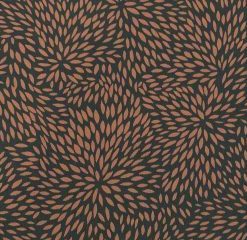
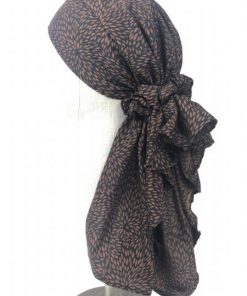
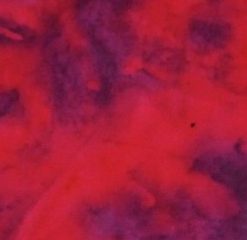
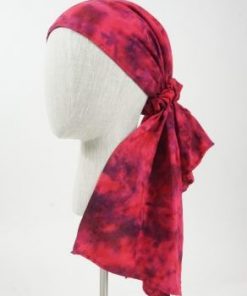
Paradise Found Chocolate arrived first and my daughter and I both loved how it looked - it’s still my dressy favorite. It was wrapped in pink tissue with the sparkly Aqua Power scarf, which my daughter claimed as her own. I knew then that I’d never have to wear the wig. When I first wore So Scarlet, she said, “You look beautiful, Mommy. It suits you.” Best compliment ever.My favorite, though, is my Grape Rush Exercise BeauBeau®. Stretchy and machine-washable, it catches sweat, but doesn’t slide or show sweat stains. When I’m hiking in the woods, it just looks like a cool head scarf and I feel strong and normal. Not like a cancer patient at all.

grape-rush-beaubeau.JPG

Six months of neoadjuvant chemotherapy, plus a bilateral mastectomy and removal of 8 lymph nodes on September 28th, helped me start Breast Cancer Awareness month cancer-free. My family is all breathing easier and no one cares anymore what is or isn’t on my head. Still, I wore my favorite BeauBeau® just yesterday. A week after my surgery, I can raise my arms enough to slide it on before a long walk. Nothing’s better than getting back to normal.

Maybe my wig will finally get used on Halloween.

Nicole Yates

More about my cancer story at Clownandpoodle.com

Ready, Set, Go Pink - Breast Cancer Awareness Month

September 26th, 2012

 breast-cancer-pink.jpg

Are you ready for seeing the world through a wave of bright pink for the month of October?  Yes, Breast Cancer Awareness Month is just one week away and  I’m preparing myself for the onslaught of everything pink. Don’t get me wrong,  Breast Cancer Awareness month has deep personal significance to me. There is hardly a woman on the maternal side of my family who hasn’t had breast cancer, some more than once.  Breast cancer tends to be on my mind 12 months of every year, not just in October.   I’m all for dedicating a month to raise awareness and funding for research and/or support for preventative care for women diagnosed with this disease,  but is  “pinkwashing” really necessary to raise awareness and research funds?  There is actually research supporting the theory that strong pink branding of breast cancer charities is counterproductive, suggesting that fundraisers consider switching to more neutral colors.

How about showing your support for this years Breast Cancer Awareness month  with a “softer”, more neutral shade of pink.   There is a way to show “Pink” solidarity in variations of the color pink.   Petal pink is a feminine color that tends to be universally flattering, easy to dress up or down, accessorizes well  and is fashionably correct to wear 12 months of the year.   It’s really hard to grow tired of this color.  Yes, seeing a sea of pink-capped and pink-ribboned women is very powerful experience but there is no reason why you can’t be fashionable and supportive in the same outfit!  Try petal pink this October and just maybe we can start a new trend!

Susan Beausang, President 4women.compink-breast-cancer.jpg

Work Out Wednesday - Ballet

September 19th, 2012

HAPPY

WORKOUT

WEDNESDAY!

4447759202.jpg

Remember when working out wasn’t working out? It was just doing what you wanted to do! Recapture those days by adding some ballet to your exercise routine. Famous ballerina, Grier Cooper, shares her, “10 Reasons to Studay Ballet at Any Age.”

10 Reasons to Study Ballet at Any Age

By Grier Cooper  Article Source: http://EzineArticles.com/?expert=Grier_Cooper

[F]ive-year-olds haven’t cornered the market on the desire to learn ballet; the truth is that there are just as many businesswomen and mothers with the same dream. It’s never too late (or too early) to follow your heart, slither into a leotard and tights and join in a ballet class, and the benefits are huge. For instance:

1. Discipline. There is something to be said for the fine art of mental control. While the lack of it is usually glaringly apparent in five-year-olds, it lurks in the deep recesses of the minds of most adults, too. We’ve just gotten better about camouflaging it. Mind over matter is a huge skill that can be applied in every facet of life for the remainder of one’s lifetime.

2. Grace, strength and control. It’s easy to identify a ballerina in a crowd, and this trio of benefits is a good part of the reason why. Dancers move differently than the rest of their human counterparts, because they have spent a great deal of time and energy cultivating grace, strength and control. Precision of movement is one of the most fundamental requirements of ballet, and the good news is that it’s transferable to other athletic endeavors. That is why many football players, gymnasts and other athletes also spend time at the ballet barre.

3. Flexibility. More flexibility means greater range of movement and less potential for injury. Who wouldn’t want those two things? Ready to sign up yet?

4. Great exercise. Let’s face it, bodies were made to move, as often as possible, every day. Why else would we have all these moving parts? Since exercise is absolutely necessary for health and longevity, we may as well pick an activity we enjoy. This will probably sound like a biased statement, but dance is a whole lot more fun than the gym. Or consider this simple equation: Joy of movement= laying the groundwork for a life time of good exercise habits.

5. Better posture. One of the first things you will learn in ballet class is how to stand up straight. Where else will you learn this if not in ballet class? And to reiterate an earlier point, this is another one of the reasons why it is so easy to identify ballerinas in a crowd.

6. Outlet for personal expression. For some of us, it’s hitting a pillow. For others, it’s yelling from a mountaintop or scribbling away in a journal. But it can’t hurt to add another option to your list.

7. Listening and memory skills. There’s an awful lot of stuff to learn during the course of a ballet class, not to mention the fact that the terminology is all in French. The only way to stay ahead of the game is to pay very close attention to what is being said and demonstrated, and then do your earthly best to remember when to do what. This is fantastic for keeping your brain lively.

8. Body awareness. You’re probably aware enough of some parts you would like to change, erase or give away. That’s not the type of body awareness that’s being addressed. Instead, you will grow awareness of how to move all the different parts of the body, and what is attached to what. And hey, your balance will improve. Dramatically.

9. Spatial awareness. Ballet classes begin at the barre but end in the center of the room, with lots of jumping and twirling. Not only will you learn to move in desired ways in the desired direction, you will also learn how to do all this without crashing into anyone else. Works really well in crowds.

10. Fun. This one pretty much goes without saying, but is one of the very best possible reason to sign up for ballet, which is why it was saved it for last. Who couldn’t use a little more fun in their life?

Whether you are five or fifty-five, you can enjoy the benefits of ballet class. How many other hobbies can boast fitness, posture, balance and fun? It’s never too late (or too early) to pursue the dream of dance.


Practice your pirouettes in style! Wear a “Ballerina Workout” Beaubeau to class!ballerinacopper175x240mannb.jpgballerinawomann.jpgballerinapinkwo175x240manna.jpg

Meatless Monday - Rosh Hashanah Challah

September 17th, 2012

L’Shana Tova!   url.png

Happy New Year to our Jewish friends. Rosh Hashanah is the new year of people and animals. This year, have a vegan celebration!

On today’s Meatless Monday we are sharing a recipe for almost-vegan challah bread (contains honey), raisins optional!


url.jpg

Almost-Vegan Challah
Source: “The Jewish Vegetarian Year Cookbook,” by Roberta Kalechofsky and Rosa Rasiel 
Yield: 2 loaves

2 packages dry yeast
2 cups warm water (105°F-115°F)
1/2 cup sugar, divided
3 tablespoons flaxseed
3/4 cup water
6 to 9 cups unbleached white flour
2 tablespoons honey
2 teaspoons salt
3 ounces vegetable oil
1/2 teaspoon turmeric
Raisins (optional, but include for Rosh Hashanah challah)

In a small bowl, dissolve yeast in 2 cups warm water. Use a thermometer, if possible. Otherwise, add 1 cup boiling water to 1 cup cold water. Add 1/4 cup sugar, and allow the yeast to work for about 10 minutes while you prepare the dry ingredients.

Place flaxseeds and water in a blender and blend for about 2 minutes or until the mixture is the consistency of unbeaten egg white. Or grind the seeds in a spice mill or coffee grinder; place ground seeds and water in bowl of food processor and beat to desired consistency.

Place 6 cups of flour, salt, remaining sugar and raisins (if using) in a large bowl. Add flaxseed mixture, oil, honey, and yeast. Mix until dough forms, adding more flour if needed. Turn the dough out onto a floured surface, flour your hands, and knead the dough for about 10 minutes. Add flour as necessary until the dough no longer sticks to the board or your hands.

Oil a deep bowl. Put the dough in it, turning to grease it on all sides. Cover the bowl with a damp cloth or with plastic wrap, and allow it to ruse for about 1-1/2 hours, or until doubled in bulk.

Punch down and allow to rise a second time. Punch down again and knead briefly. Use a heavy, sharp knife to cut dough in half. Cover one half while you shape the first loaf.

I am omitting braiding instructions because there are many excellent braiding suggestions in the archives, and at least one of them ought to match this recipe’s suggestion, which is for a standard three strand braid.

Place both shaped loaves on oiled baking sheet. Cover and allow loaves to rise again.

Preheat oven to 350°F.

For a crisp crust, brush loaves with cold water before placing in oven. Bake 25 to 35 minutes. The usual criterion for doneness is that the loaf sounds hollow when rapped on the bottom with your knuckles, or you may insert a thermometer in the crease on the bottom of the bread. It shouldregister 200°F.

Cool loaves on a cooling rack. Freezes well.

For more information on Rosh Hashanah read here.

Finish your meal with a pomegranate. It is said to bring prosperity and fortune as abundant as the fruit’s seeds. 6a010536b72a74970b01348721c78a970c-800wi.jpg